


Table of Contents
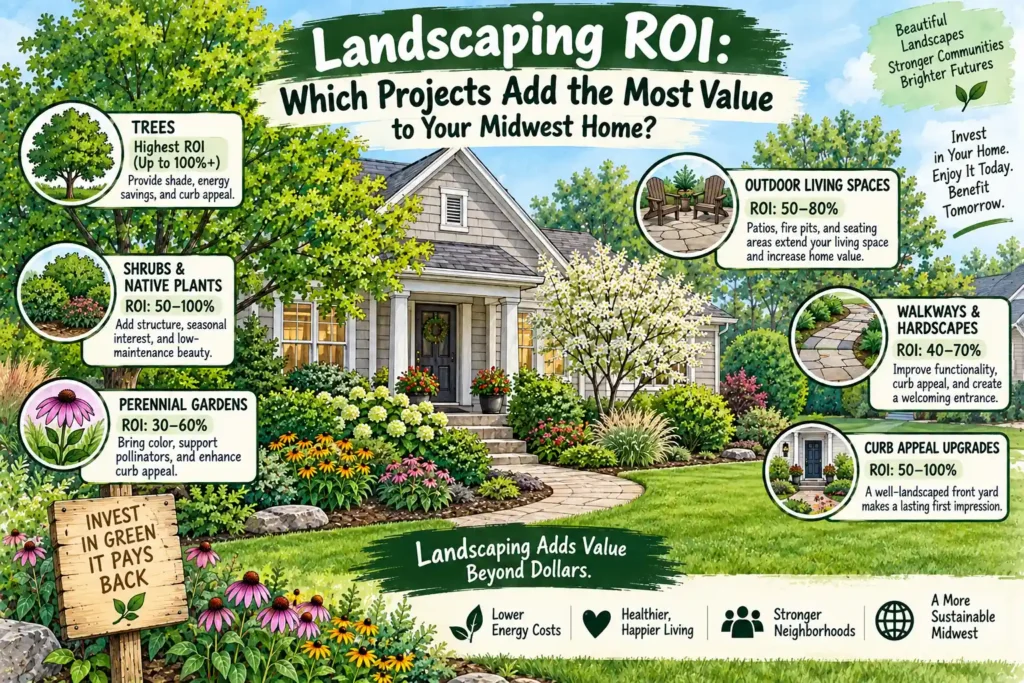
Landscaping can do more than make your yard look better. The right outdoor improvements can increase curb appeal, improve how homeowners use their property, and make a home more attractive to future buyers. However, not every landscaping project delivers the same return on investment (ROI). In the Midwest, factors such as freezing winters, heavy rain, summer heat, drainage, and seasonal maintenance can influence which improvements provide lasting value. From healthy lawns and well-designed patios to trees, retaining walls, and low-maintenance garden beds, understanding where to invest can help homeowners get more from their landscaping budget.
What Does Landscaping ROI Mean?
Landscaping ROI refers to the value a homeowner receives compared with the amount spent on an outdoor improvement. That value is not limited to a potential increase in resale price. A project may also provide practical benefits such as improved drainage, additional outdoor living space, greater privacy, lower maintenance, or better curb appeal. Because properties and buyers have different priorities, homeowners should consider both financial value and everyday usefulness when comparing landscaping projects.
1. Improve the Lawn and Overall Curb Appeal
A healthy, maintained lawn is one of the first things people notice when approaching a home. Bare areas, overgrown edges, weeds, and neglected landscaping can make the entire property appear poorly maintained. Basic improvements such as repairing damaged turf, defining lawn edges, removing weeds, and cleaning up planting beds can create a noticeable transformation without requiring a complete landscape redesign. For Midwest homeowners working with a limited budget, improving the condition of highly visible areas can be a practical starting point.
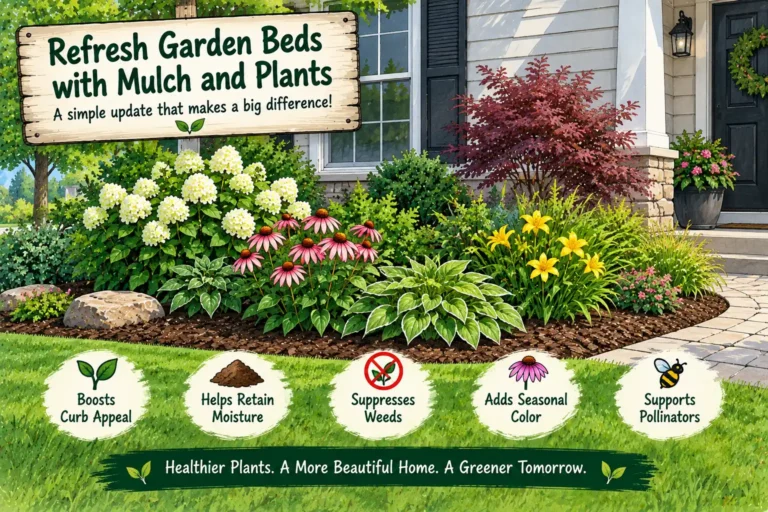
2. Refresh Garden Beds with Mulch and Plants
Garden beds can add color, texture, and definition around a home, especially near entrances and along foundations. Refreshing old beds with mulch, removing weeds, and adding well-placed shrubs or perennials can provide a cleaner and more finished appearance. Choosing plants suited to Midwest conditions can also reduce replacement and maintenance needs over time. Instead of overcrowding beds with many varieties, a simple planting design with appropriate spacing can provide attractive results while remaining manageable.
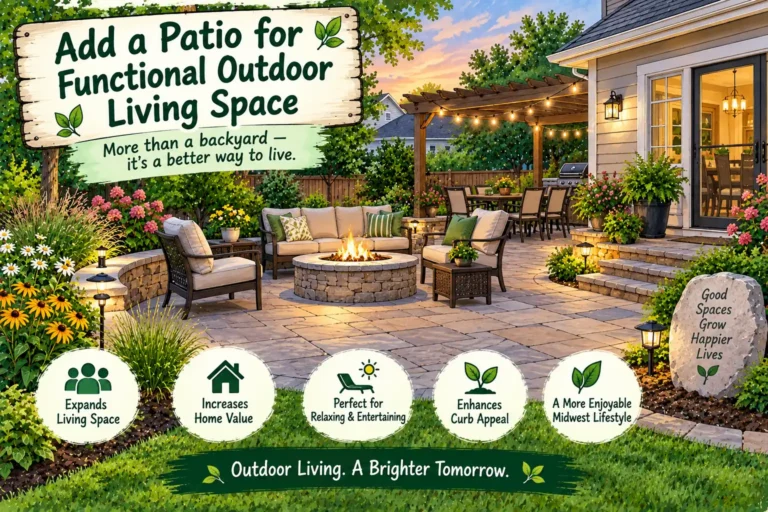
3. Add a Patio for Functional Outdoor Living Space
A patio can turn an underused section of the yard into an area for dining, relaxing, entertaining, or spending time with family. This combination of appearance and functionality can make patios one of the more meaningful landscape upgrades for homeowners who regularly use their outdoor space. Pavers and other durable materials can also complement the architecture of the home. Proper base preparation and drainage are especially important in Midwest climates because repeated freezing and thawing can contribute to shifting, settling, and uneven surfaces. Choosing the right patio material can also affect drainage, maintenance, and long-term performance. If you’re considering pavers, our Permeable vs. Traditional Pavers: Which Is Better for Your Midwest Patio? guide compares two popular options for Midwest properties.
4. Plant Trees for Long-Term Landscape Value
Trees are a long-term landscaping investment that can add shade, privacy, structure, and seasonal beauty to a property. Strategically positioned trees may make patios and yards more comfortable during hot summer months while helping frame the home visually. Native or regionally appropriate trees are generally better suited to local growing conditions than poorly adapted species. Because trees can remain in the landscape for decades, homeowners should consider mature height, canopy width, root growth, sunlight, and distance from buildings before planting. Because trees are a long-term investment, homeowners should consider both installation costs and mature size before choosing what to plant. If you’re budgeting for professional installation, our Price Guide for Planting Trees: Average Costs in the Midwest for 2026 explains the costs Midwest homeowners can expect when adding trees to their landscape.
5. Fix Drainage Problems Before Adding Cosmetic Features
Drainage improvements may not provide the immediate visual impact of flowers or a new patio, but they can protect other landscape investments. Standing water, erosion, soggy lawns, and runoff around planting beds can damage plants and make portions of a yard difficult to use. In some situations, grading adjustments, drainage systems, or other water-management improvements may be more valuable than adding another decorative feature. Addressing these problems first can create a stronger foundation for future landscaping projects.
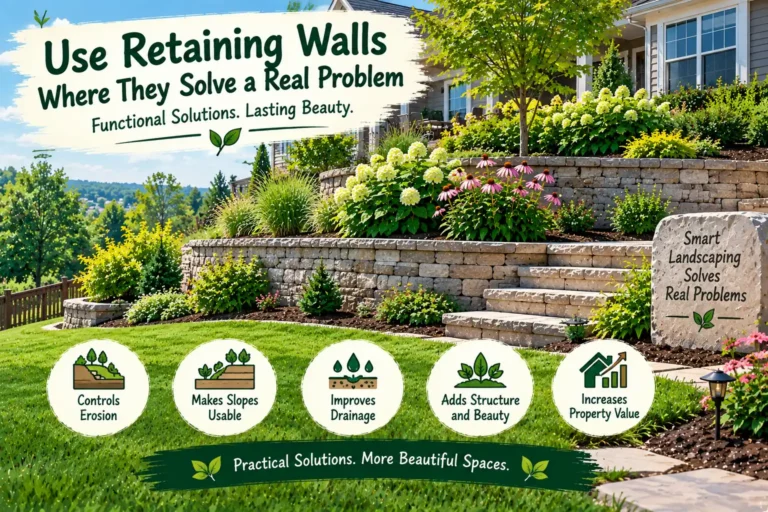
6. Use Retaining Walls Where They Solve a Real Problem
Retaining walls can add structure and visual interest, but their greatest value often comes from solving practical landscape challenges. On sloped Midwest properties, a properly designed wall can help manage elevation changes, create usable planting areas, and control soil movement. Retaining walls can also define patios, garden beds, or other outdoor spaces. Because drainage and construction quality are critical to long-term performance, retaining walls should be planned around the site’s actual conditions rather than installed only as decoration. Proper drainage is especially important because water pressure and Midwest freeze-thaw cycles can affect the long-term performance of a wall. Before investing in one, read Why Midwest Retaining Walls Fail: 5 Critical Drainage Tips to understand common problems and how thoughtful drainage planning can help prevent them.
7. Create Low-Maintenance Landscaping
A beautiful landscape can become less appealing when it requires constant watering, trimming, weeding, and replacement. Low-maintenance landscaping focuses on choosing plants and materials that work with the property’s conditions rather than fighting them. Native shrubs, appropriately placed perennials, mulch, defined borders, and smaller areas of high-maintenance lawn can create an attractive landscape with more manageable upkeep. Homeowners interested in reducing lawn space can explore Shrink the Lawn: 7 Native Midwest Shrubs for a Low-Maintenance Backyard for plant ideas that can add structure and seasonal interest while creating a lower-maintenance yard. This can be especially useful for homeowners who want outdoor spaces that remain appealing without requiring extensive weekly maintenance.
8. Improve Walkways and Landscape Edging
Walkways and edging can make a landscape feel organized and intentional. A clear path from the driveway to an entrance improves functionality, while defined borders keep lawns and garden beds visually separated. Repairing uneven walkways and refreshing worn edges can also improve the overall appearance of older landscapes. These smaller projects may work particularly well when combined with new mulch, plants, or lawn improvements to create a more complete curb-appeal update. The type of edging you choose can influence both the finished appearance and ongoing maintenance of your landscape. If you’re comparing options, our Steel vs. Natural Edge: The 2026 Price Guide for High-End Midwest Landscapes explains the differences between two common approaches and what homeowners should consider when budgeting.
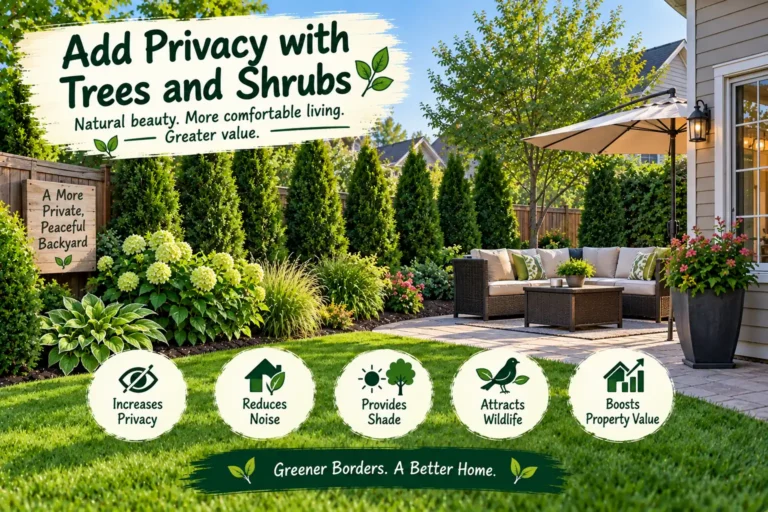
9. Add Privacy with Trees and Shrubs
Privacy landscaping can make a backyard feel more comfortable without relying entirely on fencing. Trees and shrubs can help screen neighboring properties, roads, patios, and other unwanted views while adding greenery to the landscape. Rather than creating a dense row of a single species, homeowners can combine plants of different heights and widths for a more natural appearance. Mature plant size should always be considered so that a privacy screen does not become overcrowded or difficult to maintain later.
Which Landscaping Projects Should You Prioritize?
The best project depends on what the property needs most. A home with drainage problems may benefit more from correcting water flow than installing a new garden bed, while a property with an unfinished backyard may gain more everyday usefulness from a patio. Homeowners preparing to sell may focus first on visible curb appeal, while those planning to remain in the home for years may prioritize shade trees, outdoor living areas, privacy, and low-maintenance improvements. Addressing necessary repairs first and cosmetic upgrades second can help prevent money from being spent on improvements that later need to be removed or redone.
Avoid Over-Improving Your Landscape
More landscaping does not automatically mean more value. Elaborate designs, excessive hardscaping, high-maintenance plants, and features that appeal to a very specific taste may cost more without providing an equivalent benefit. A balanced landscape that looks healthy, functions well, and is relatively easy to maintain can appeal to a wider range of homeowners. Before starting a major project, consider whether the improvement solves a problem, improves everyday use, enhances appearance, or provides a combination of these benefits.
Conclusion
Landscaping ROI is about investing in outdoor improvements that make a Midwest property more attractive, functional, and easier to maintain. Healthy lawns and garden beds can strengthen curb appeal, while patios, trees, privacy plantings, drainage improvements, and retaining walls can address larger functional needs. The most valuable project will vary depending on the condition of the property, available budget, and long-term plans for the home. By addressing necessary landscape problems first and then choosing improvements that provide lasting benefits, Midwest homeowners can create an outdoor space they enjoy today while supporting the overall appeal of their property for years to come. For more further information, please visit our page on landscaping services. For support on your next gardening project, please feel free to reach out through our contact form, and our team will be happy to help.