


Table of Contents
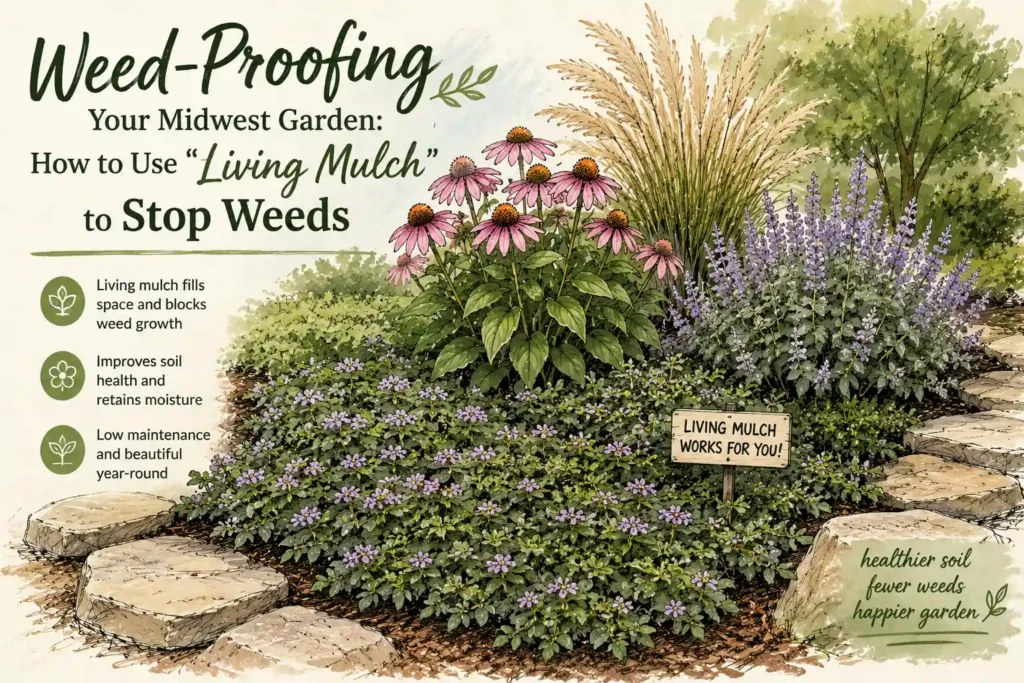
Weeds are one of the biggest challenges for Midwest gardeners. They compete with flowers, vegetables, shrubs, and trees for water, nutrients, and sunlight, making it difficult for desirable plants to thrive. While traditional wood mulch helps suppress weeds, many homeowners are discovering another effective solution: living mulch. Living mulch uses low-growing plants as a natural ground cover to reduce weed growth while improving soil health and adding beauty to the landscape. Unlike traditional mulch, living mulch continues to grow throughout the season, creating a dense layer that shades the soil and limits opportunities for weeds to germinate. In this guide, you’ll learn what living mulch is, its benefits, the best plants for Midwest gardens, and how to use it effectively to create healthier, lower-maintenance landscapes. Living mulch is just one way to improve your landscape while reducing maintenance. If you’d like to learn more about how mulch benefits your garden, read our guide on 8 Benefits of Adding Mulch in your Garden Beds.
What Is Living Mulch?
Living mulch refers to low-growing plants that cover the soil while protecting it from weeds, erosion, and moisture loss. Instead of relying entirely on wood chips or bark mulch, gardeners intentionally plant ground covers that spread across the landscape and naturally fill empty spaces. These plants create a living barrier that blocks sunlight from reaching weed seeds, making it much harder for unwanted plants to establish themselves. Living mulch also improves the appearance of garden beds by replacing bare soil with attractive foliage and seasonal blooms.
How Living Mulch Helps Prevent Weeds
One of the main reasons weeds thrive is because they have access to sunlight and open soil. Living mulch solves this problem by creating a dense canopy that shades the ground throughout the growing season. As the plants spread, they leave fewer open spaces where weed seeds can germinate. Their root systems also compete with weeds for moisture and nutrients, reducing the resources available for unwanted growth. While living mulch will not eliminate every weed, it significantly reduces the amount of hand-pulling and maintenance required in most landscape beds. Living mulch works best as part of a complete weed management strategy. For additional chemical-free solutions, explore our article on 12 Ideas for Natural Weed Control (Organic Options).
Best Living Mulch Plants for Midwest Gardens
Many ground cover plants perform exceptionally well in Midwest landscapes because they tolerate seasonal weather changes while spreading steadily across garden beds. Creeping thyme is a popular choice because it forms a fragrant mat and produces attractive flowers during the growing season. Creeping phlox offers colorful spring blooms that create excellent visual appeal. Ajuga provides dense foliage with blue flower spikes, while sedum performs well in sunny, dry locations. Sweet woodruff thrives in shady gardens, and clover is often used in vegetable gardens to improve soil while suppressing weeds. Selecting plants that match your site’s sunlight, soil, and moisture conditions will help your living mulch establish more quickly. Before planting living mulch, make sure you’re removing actual weeds rather than beneficial plants. Our guide on Weeds vs. Plants: 5 Simple Ways to Tell the Difference can help you identify what’s growing in your garden.
Combining Living Mulch with Traditional Mulch
Living mulch and traditional wood mulch often work best when used together. During the first growing season, applying a thin layer of hardwood mulch around newly planted ground covers helps retain moisture and reduce weed competition while the plants become established. As the living mulch spreads, it gradually replaces much of the exposed mulch surface. This combination provides immediate weed suppression while allowing the ground cover to develop into a long-term, low-maintenance solution. Many professional landscapers use this layered approach to create attractive and functional garden beds.
Where Living Mulch Works Best
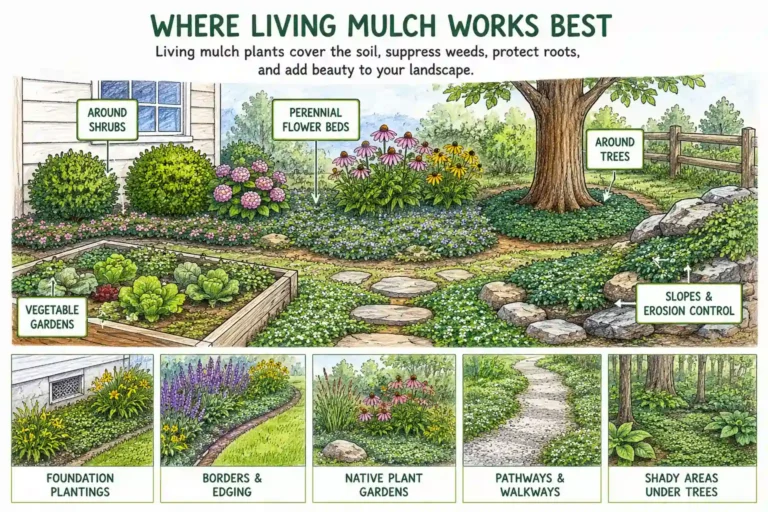
Living mulch works particularly well around ornamental trees, shrubs, perennial flower beds, and native plant gardens where long-term ground coverage is desirable. It is also commonly used on slopes to reduce erosion while minimizing weed growth. Vegetable gardens can also benefit from carefully selected living mulch species that improve soil health without competing aggressively with crops. However, gardeners should avoid using fast-spreading ground covers around small or delicate plants that may become overcrowded.
Tips for Establishing Living Mulch Successfully
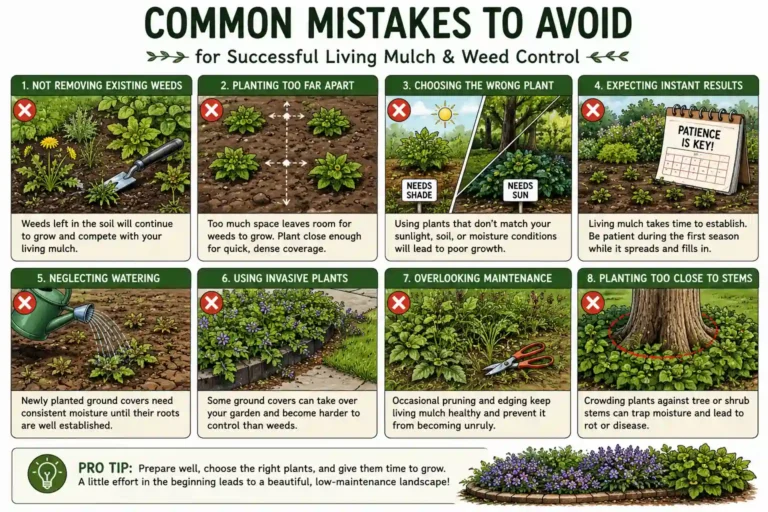
Proper planning plays a major role in the success of living mulch. Begin by removing existing weeds before planting ground covers to give them the best chance of establishing quickly. Choose species that match the sunlight and moisture conditions in your landscape, and space plants according to their mature spread rather than their initial size. Water regularly during the establishment period and continue monitoring for weeds until the ground cover fills in. Periodic pruning may also be necessary to prevent certain varieties from spreading beyond their intended planting areas.
Common Mistakes to Avoid
Many homeowners expect living mulch to provide instant weed control, but patience is important during the establishment phase. Planting ground covers too far apart often leaves gaps where weeds can continue growing for several seasons. Choosing invasive species without understanding their growth habits can also create future maintenance problems. Another common mistake is neglecting watering during the first year, which slows plant growth and delays the development of a dense weed-suppressing canopy. Careful plant selection and regular maintenance during the first growing season will lead to much better long-term results.
Why Living Mulch Is a Sustainable Landscaping Solution
Living mulch provides more than simple weed control. Because it consists of actively growing plants, it improves biodiversity by supporting pollinators and beneficial insects. The plant roots stabilize soil, reduce erosion, and improve water infiltration during heavy Midwest rainstorms. Many living mulch species also contribute organic matter as leaves naturally decompose, improving soil structure over time. By reducing the need for herbicides and frequent mulch replacement, living mulch offers an environmentally friendly approach to maintaining attractive landscape beds.
Conclusion
Even with living mulch, it’s helpful to recognize common invasive plants before they spread. Learn how to identify and manage common species in our guide to 17 Lawn and Garden Weeds: How to Identify and Control Them.
Living mulch is an effective and sustainable way to reduce weeds while improving the health and appearance of your Midwest garden. By replacing large areas of bare soil with attractive ground cover plants, homeowners can create landscapes that require less maintenance, conserve moisture, support beneficial wildlife, and naturally suppress weed growth. Whether you combine living mulch with traditional hardwood mulch or use it as a standalone solution, careful plant selection and proper installation will produce long-lasting results. With the right approach, living mulch can transform your garden into a healthier, more resilient landscape that stays beautiful throughout every growing season. For more detailed information and tailored advice, visit our page on weed pulling services. For support on your next weeding project, please feel free to reach out through our contact form, and our team will be happy to help.