


Table of Contents
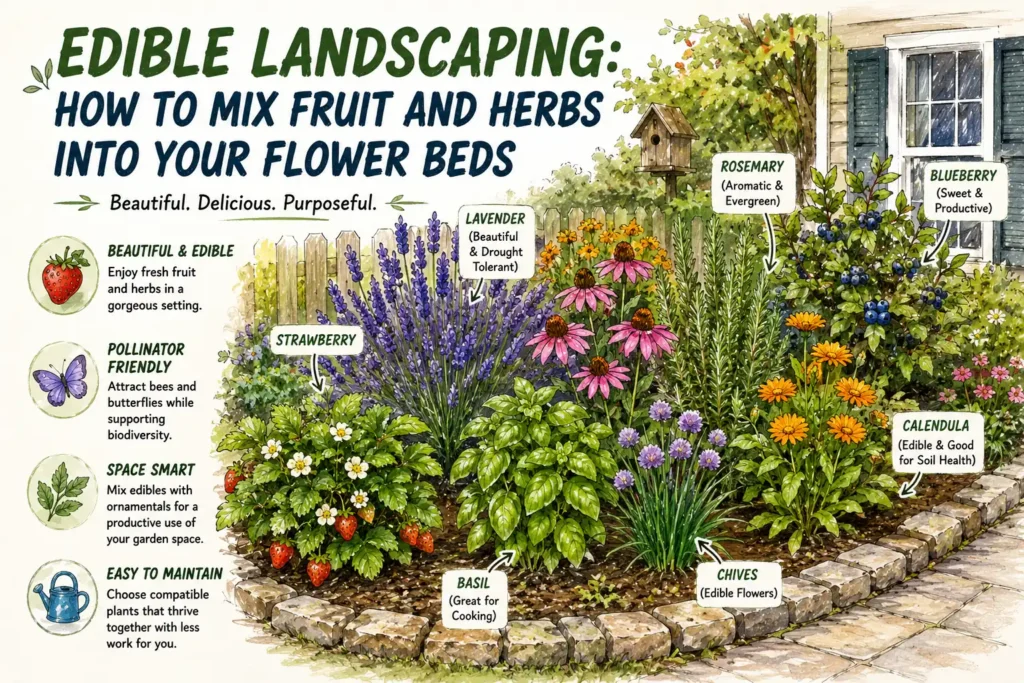
A beautiful flower bed can do more than add color and curb appeal to your yard. With edible landscaping, you can combine ornamental flowers with fruit-bearing plants, culinary herbs, and other useful crops to create a garden that looks attractive while producing fresh food. Instead of separating vegetables and herbs into a traditional garden plot, edible landscaping blends productive plants naturally into existing beds around patios, walkways, and other landscape areas. For Midwest homeowners, this approach can make better use of limited yard space while adding fragrance, texture, seasonal color, and fresh ingredients throughout the growing season. The key is choosing plants with similar sunlight, soil, and watering needs. In this guide, we’ll explore practical ways to mix fruit and herbs into your flower beds without sacrificing the polished appearance of your landscape.
What Is Edible Landscaping?
Edible landscaping combines plants grown for food with plants traditionally selected for their ornamental value. Herbs, berry-producing shrubs, compact fruit plants, vegetables, and edible flowers can become part of the same landscape design as perennials and annuals. Rather than creating obvious rows of crops, homeowners can arrange edible plants according to height, color, texture, and seasonal interest. This approach allows productive plants to become part of the overall landscape while making better use of existing garden space.
Why Add Edible Plants to Flower Beds?
Mixing edible plants into flower beds allows one area of the yard to serve several purposes at once. Herbs can provide fragrance and texture, berry plants can add flowers and colorful fruit, and edible flowers can brighten borders throughout the growing season. Homeowners can also harvest fresh ingredients without dedicating a large portion of the backyard to a separate vegetable garden. When planned carefully, edible landscaping can reduce unused planting space and create a more diverse garden that supports pollinators while remaining visually appealing.
1. Use Herbs Along the Front of Garden Beds
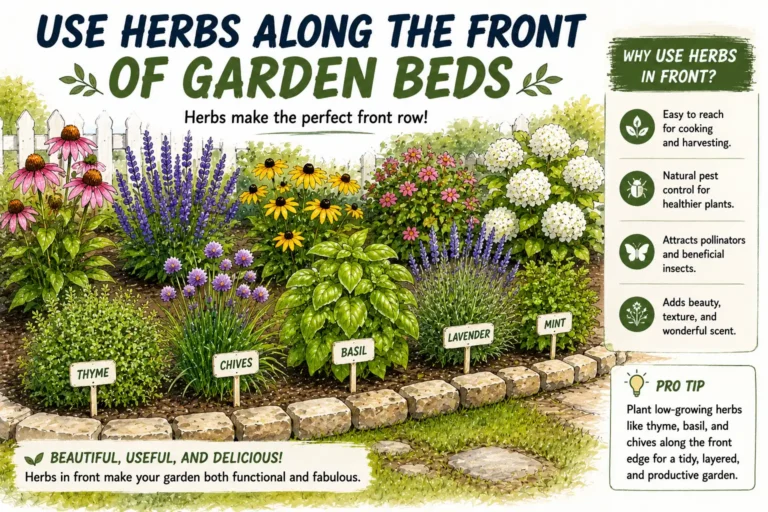
Low-growing herbs work particularly well along the edges of flower beds, pathways, and patios. Thyme, chives, oregano, sage, and parsley can provide different foliage colors and textures while keeping frequently harvested ingredients within easy reach. Some herbs also produce attractive flowers that draw pollinators into the landscape. Consider each herb’s mature size and growth habit before planting so vigorous varieties do not overwhelm nearby flowers. Grouping herbs with plants that prefer similar moisture and sunlight conditions makes routine garden care easier.
2. Add Berry Shrubs for Structure and Seasonal Interest
Berry-producing shrubs can provide the same structure as traditional ornamental shrubs while offering an edible harvest. Blueberries, currants, gooseberries, and certain compact raspberry varieties can work in mixed beds when their growing requirements match the site. Many berry shrubs provide spring flowers, summer fruit, attractive foliage, and fall color, giving them value beyond the harvest season. Position larger shrubs toward the middle or back of the bed so they provide height without shading smaller herbs and flowers.
3. Use Strawberries as an Edible Groundcover
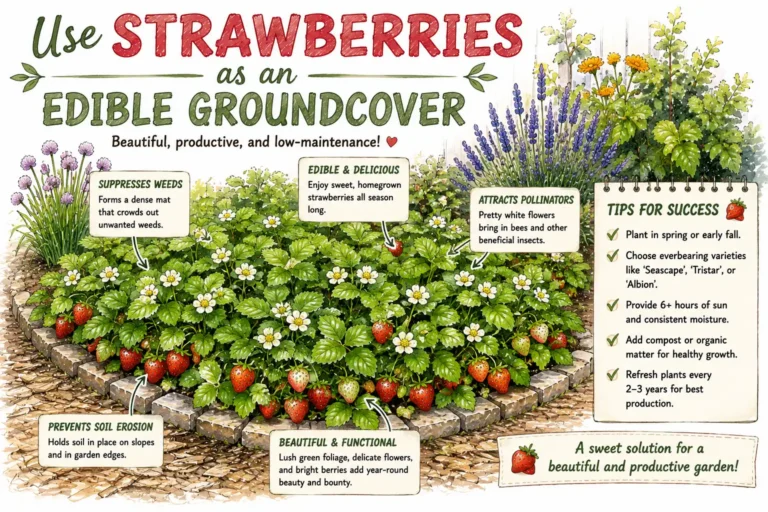
Strawberries can fill open areas near the front of beds and provide an attractive alternative to conventional groundcovers. Their low-growing foliage spreads across bare soil, while spring flowers are followed by edible fruit. Alpine strawberries can be especially useful in smaller spaces because of their compact appearance. Give strawberry plants adequate sunlight and airflow, and keep fruit away from consistently wet soil when possible. Their spreading habit should also be monitored so they do not crowd slower-growing ornamental plants.
4. Mix Culinary Herbs with Flowering Perennials
Many culinary herbs look attractive enough to function as ornamental plants. Lavender, sage, chives, thyme, and oregano can introduce contrasting foliage, fragrance, and flowers among traditional perennials. Combining herbs with flowering plants can also create a longer season of visual interest as different species bloom at different times. Instead of placing every herb together, repeat small groups throughout the bed to create a more intentional design. Just make sure neighboring plants share compatible growing conditions.
5. Add Compact Fruit Plants as Focal Points
Compact fruit plants can become attractive focal points in larger flower beds. Depending on your Midwest growing zone and available space, dwarf or compact fruit varieties may provide spring blossoms, summer foliage, and an edible harvest. Containers can also work well for fruit plants that need more controlled soil conditions or easier seasonal management. If your edible landscape includes fruit trees, proper installation can give them a healthier start, so our Step-by-Step Guide to Planting Different Types of Trees can help you plan the planting process. For homeowners considering professional installation or a larger planting project, our Price Guide for Planting Trees: Average Costs in the Midwest for 2026 also explains what to expect when budgeting for tree planting. Before choosing any fruit tree, check its mature size, pollination requirements, cold hardiness, and sunlight needs to make sure it fits your landscape.
6. Incorporate Edible Flowers for Extra Color
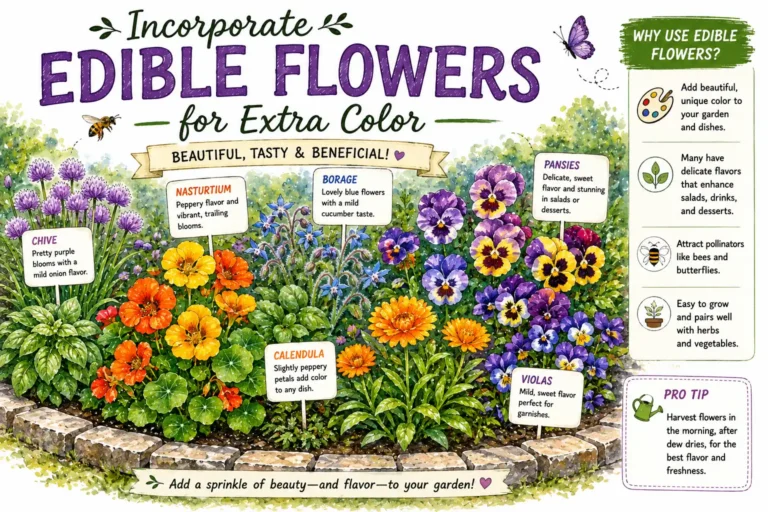
Edible flowers offer one of the easiest ways to combine ornamental and productive gardening. Nasturtiums, calendula, pansies, and certain other edible species can add bright seasonal color while providing flowers that may be harvested for culinary use. Place them along borders or between herbs and perennials to fill smaller gaps in the planting design. Only consume flowers that you can positively identify as edible, and avoid plants treated with pesticides or other products that are not labeled for edible crops.
7. Layer Plants by Height for a Natural Design
A layered planting arrangement can make edible landscaping look intentional rather than crowded. Place taller fruit shrubs or structural plants toward the back, medium-height herbs and flowering perennials through the middle, and strawberries, thyme, or other low-growing plants near the front. Repeating colors and textures throughout the bed helps connect edible and ornamental plants visually. Leave enough room for each plant’s mature size so that sunlight and airflow can reach lower-growing plants as the garden fills in. Edible plants can also be combined with native shrubs to create a fuller, more diverse landscape. If you’re looking for hardy plants to fill larger areas while reducing traditional lawn space, explore Shrink the Lawn: 7 Native Midwest Shrubs for a Low-Maintenance Backyard for additional ideas suited to Midwest landscapes.
Match Plants with Similar Growing Conditions
One of the most important parts of edible landscaping is grouping plants according to their needs rather than appearance alone. A sun-loving, drought-tolerant herb may struggle beside a plant that requires consistently moist soil. Before planting, compare sunlight, drainage, soil pH, moisture, and spacing requirements. Blueberries are a particularly important example because they generally require acidic soil that may not suit many neighboring landscape plants. Matching compatible plants reduces maintenance and gives each species a better chance to thrive.
Keep Harvesting Convenient
Accessibility matters when designing an edible flower bed. Frequently harvested herbs and strawberries should be positioned near pathways or bed edges where you can reach them without stepping on other plants. Larger fruiting shrubs can sit farther back because they typically require less frequent harvesting and maintenance. Small stepping stones can provide access inside wider beds. Planning for harvesting from the beginning prevents compacted soil and damaged plants later in the growing season.
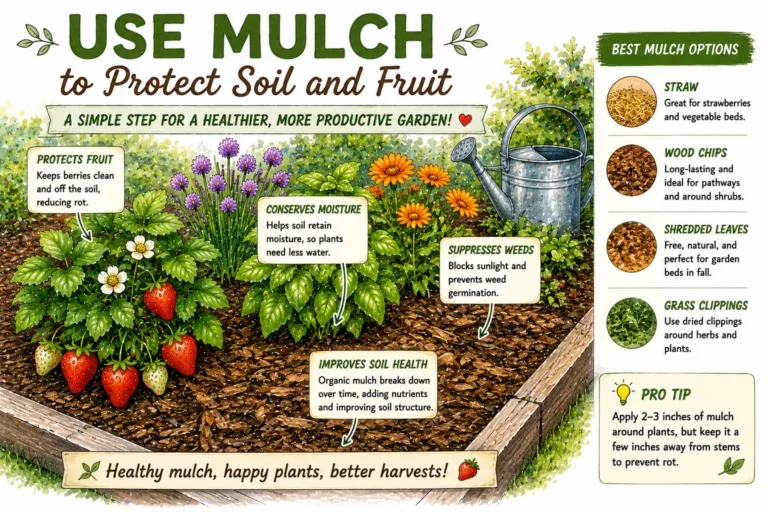
Use Mulch to Protect Soil and Fruit
Mulch can help retain moisture, moderate soil temperatures, suppress weeds, and keep low-growing fruit away from bare soil. Organic materials such as clean straw, shredded leaves, or appropriate wood mulch can work depending on the plants and location. Avoid piling mulch directly against stems, crowns, or woody trunks, where excess moisture can contribute to problems. Because you’re growing food, choose clean landscaping materials and follow product directions carefully when using fertilizers, pesticides, or other treatments nearby.
Plan for Midwest Seasons
Midwest gardens experience hot summers, cold winters, spring temperature swings, and varying rainfall, so cold hardiness should be an important part of plant selection. Choose perennial herbs, berries, and fruit plants rated for your local USDA hardiness zone rather than assuming every edible variety will survive winter. Annual herbs and flowers can fill seasonal gaps, while hardy perennials provide structure from year to year. A mix of plants with different harvest and bloom periods can keep the landscape productive and attractive from spring through fall.
Keep the Design Attractive After Harvest
An edible landscape should continue looking appealing even after fruits, herbs, or flowers have been harvested. Choose plants that offer more than one visual feature, such as attractive foliage, flowers, branching structure, or fall color. Repeating ornamental plants between edible varieties can maintain consistency throughout the bed. You can also use decorative edging, pathways, containers, and garden structures to give the landscape a finished appearance throughout seasons when fewer edible plants are producing.
Conclusion
Edible landscaping offers Midwest homeowners a practical way to make flower beds more productive without sacrificing curb appeal. By combining berry shrubs, strawberries, culinary herbs, edible flowers, and suitable compact fruit plants with traditional ornamentals, you can create a landscape that provides color, texture, wildlife value, and fresh ingredients from the same space. Successful edible landscaping starts with thoughtful plant selection, compatible growing conditions, proper spacing, and convenient access for harvesting. Rather than converting your entire yard at once, start with one existing flower bed and introduce a few edible plants that naturally complement its design. Over time, your landscape can become a beautiful extension of your garden and a useful source of fresh food throughout the Midwest growing season. For more detailed information and tailored advice, visit our page on planting services. For support on your next planting project, please feel free to reach out through our contact form, and our team will be happy to help.